Why We Received €2.9M to Build AI's Infrastructure Layer
From metal to kMetal, a unified platform built for AI workloads, supporting Kubernetes to GPU-accelerated computing, with zero-trust, cloud-like scaling, and real multi-tenant isolation. CLASTIX CEO Adriano Pezzuto explains why the next phase of AI will be decided at the infrastructure layer, and how the €2.9M seed investment from CDP, Mistral, and Vertis will be used.
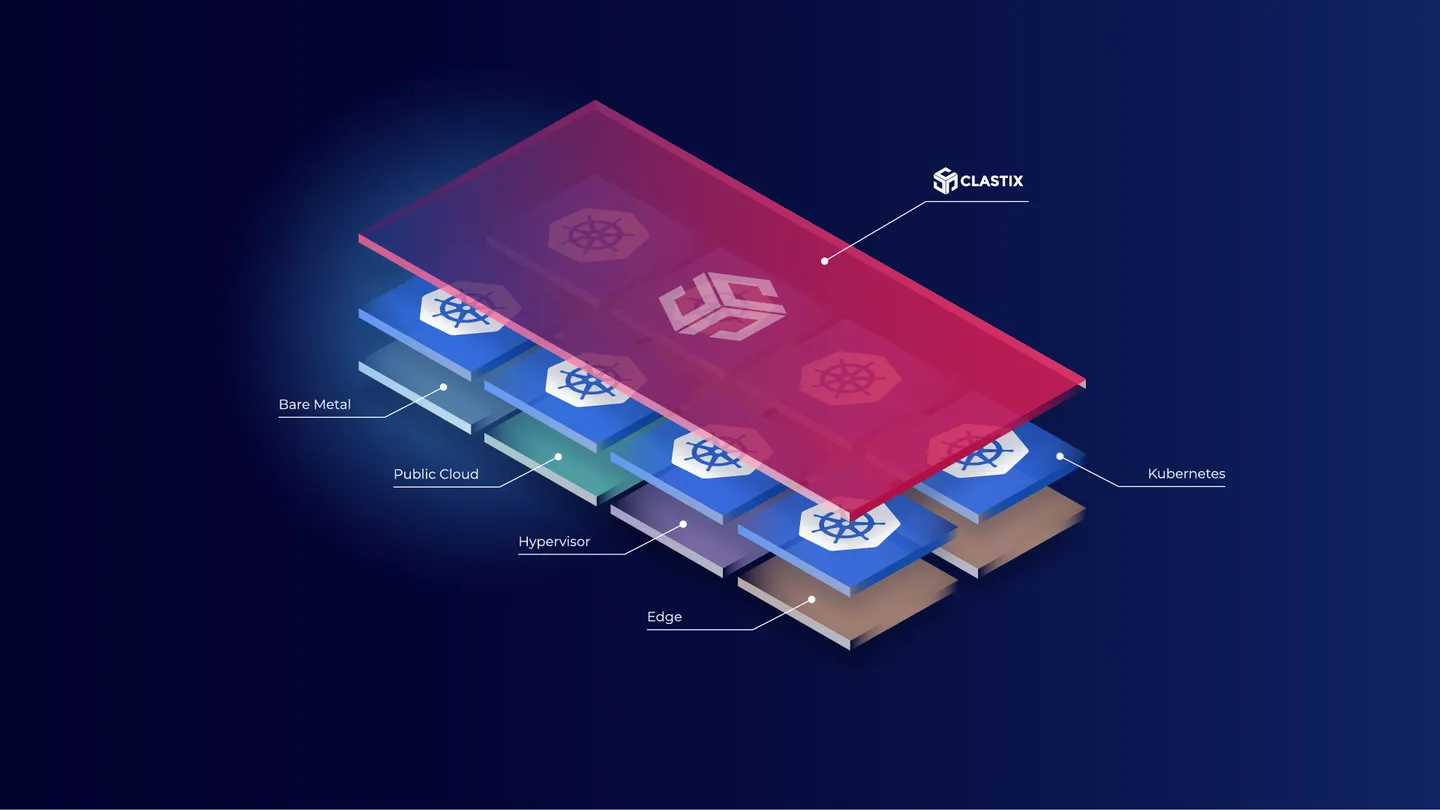
- Written by

FOUNDER · CEO
- Published on
- September 28, 2026
- Read Time
- 5 min
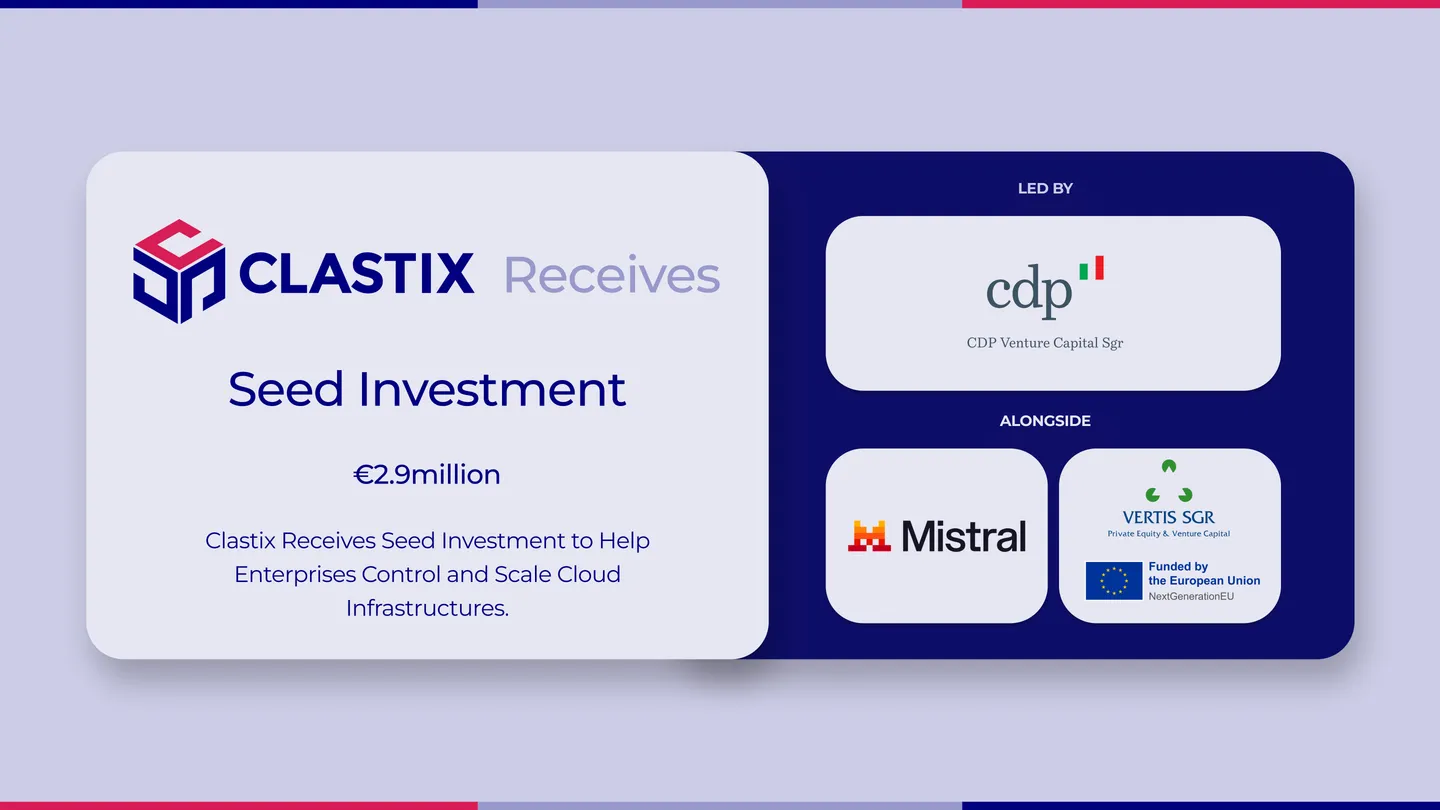
I am proud to announce that a few days ago CLASTIX received €2.9 million seed investment, led by CDP Venture Capital Sgr, with co-investors Mistral and VERTIS SGR (from the “Vertis Venture 6 Digital Sud” fund, partially financed by the European Union’s Next-Generation EU).
It is the first external funding in our six-year history as a company and will be used to expand our team and accelerate the growth of our Kubernetes infrastructure platform, kMetal, as the next phase of AI will be decided with the infrastructure layer and who controls it.
While the past few years were defined by the race for bigger, faster, and more open AI models, now far more attention is going to the infrastructure layer that those models actually run on, and this is where the next evolution will occur – where CLASTIX is most poised for growth.
Solving the most common infrastructure problems
Six years ago, CTO Dario Tranchitella and I started CLASTIX with a simple vision: make cloud native technology more open, efficient, cost-effective, and accessible.
We saw firsthand how much complexity Kubernetes can create, from operational overhead to cluster sprawl, and how that can make it harder for teams to fully benefit from the technology.
When organisations grow, their infrastructure usually grows with them. But with Kubernetes, growth often comes with hidden costs:
- Operational complexity
- Cluster sprawl
- Fake tenants isolation
- Hidden hypervisor costs
- Compromised security and control
The result is often more time spent managing complexity instead of supporting the business. We built our technology to help enterprises solve that problem with a bare-metal, sovereign foundation for modern cloud computing.
Our approach optimizes how hardware is allocated and shared between tenants, so less computing capacity sits idle or duplicated. That frees up more hardware for real workloads, cuts the costs, the time teams spend on operations, and lets organisations scale more predictably as they grow.
Why that especially matters now
AI has made compute scarce and costly, and consolidation of the virtualization market has sent platform prices soaring. Organisations are now looking for sovereign, cost-efficient alternatives on compute infrastructure.
AI workloads add urgency. Every machine tied up in overhead instead of running real applications is a machine that isn't earning anything. Isolation between tenants stops being a governance checkbox and becomes a hard requirement under a sustained load. The organisations building AI infrastructure today are the ones paying this hidden overhead at the highest rate, whether they recognize it or not.
Kubernetes is no longer just a technical platform choice. For many organisations, it is part of the operating model for delivering software faster, more securely, and with greater resilience. As Kubernetes adoption continues to expand, the companies that succeed will be the ones that can keep complexity under control, while scaling with confidence.
Our technology already runs in production with some of the most demanding infrastructure teams in Europe and North America, across AI labs, telecommunications, cloud services, and the public sector – at organisations that include NVIDIA, Mistral, and OVHcloud. That matters because it shows that our technology is not only theoretical but is already supporting complex environments where reliability, efficiency, and scale are non-negotiable.
As Mistral CTO and co-founder Timothée Lacroix put it in our press release a few days ago:
“Clastix is the backbone of our Kubernetes infrastructure – their work on multi-tenancy and managed control planes helps us to enable our training and inference clusters at scale, with the efficiency that frontier AI demands.”
Where the investment will go
This seed investment will go toward strengthening our R&D, product development, and the support structure needed to continue serving enterprise teams at a larger scale. Over the next three years, we will grow our headcount to support customer success, global go-to-market execution, and increasing customer demand. That growth will help us invest in the product, the support experience, and the commercial structure that CIOs and technical leaders expect from an infrastructure vendor.
We will continue to invest in Kamaji, our foundational open-source Hosted Control Plane engine for control-plane management, which remains available under the Apache 2.0 license. kMetal extends that foundation with commercial capabilities for fleet management, governance, and production operations.
For us, this funding is not just about growth. It is about building the company, product, and support structure that enterprises need in order to run Kubernetes efficiently at scale. We believe the next phase of Kubernetes management will be defined not just by what the technology can do, but by how well it enables your business. Container management is the problem area that CLASTIX is here to solve.
Backing from CDP Venture Capital, from Vertis through a fund dedicated to Southern Italy, and from Mistral, which runs our technology in production, tells you something about where this round came from and what it’s for. We are building this layer from Europe, with European investors, for organisations that increasingly want critical infrastructure built close to home.
For us, this funding is not about growth for its own sake. It is about building the company, the product, and the support structure that enterprises need to run modern cloud computing, efficiently at scale.
Let's build the layer the models run on – not just rent the hardware underneath it
If your team is tired of paying the control plane tax, the hyperscaler tax, various operational taxes, and wanting to move toward a hyperscaler-grade Kubernetes experience (or delivering one to your customers), talk to us: https://clastix.io/contact
Read Other Featured Articles